
What Trauma Can Look Like in First Responders Who Are Still Doing Their Jobs Well

First responder trauma does not always look like a crisis. Sometimes it looks like competence, exhaustion, hypervigilance, irritability, and a nervous system that never quite leaves work.
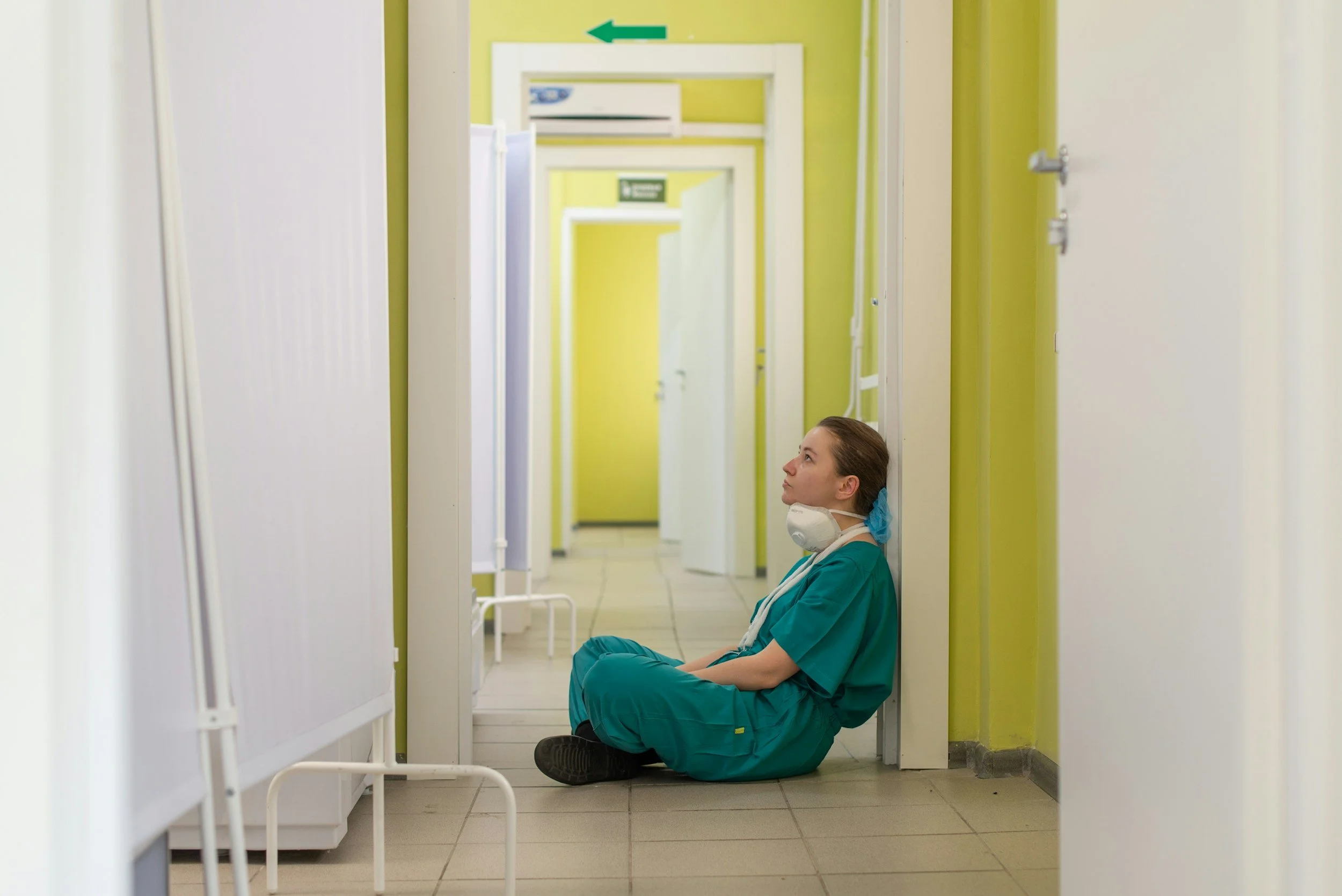
A firefighter can make every shift and still dread going to sleep. A police officer can remain composed during a critical incident and become unusually irritable over something minor at home. A paramedic can be the person everyone wants on a difficult call and still feel increasingly detached from the people they love.
This is part of what makes trauma in first responders easy to miss. We tend to associate psychological injury with obvious impairment: panic attacks, flashbacks, missed work, or an inability to function. Those symptoms can occur, but they are not the only way trauma shows up.
For firefighters, law enforcement officers, paramedics, EMTs, dispatchers, corrections professionals, and other public safety personnel, distress can coexist with excellent performance. The person may still be working, exercising, parenting, socializing, and handling responsibilities while also sleeping poorly, drinking more, avoiding certain situations, feeling emotionally numb, or remaining constantly alert.
Being functional and being unaffected are not the same thing.
Why first responder trauma can be different
Most people encounter serious injury, death, violence, or acute danger only occasionally. First responders may encounter them repeatedly as part of an ordinary workweek.
That distinction matters.
Sometimes there is one event that clearly changes something: a pediatric death, a partner injured in the line of duty, a mass-casualty event, a suicide, a shooting, or a call that closely resembles the responder's own family.
In other cases, there is no single defining event. The burden develops over years of exposure.
One fatal collision is followed by another call. Then a child abuse case. Then a suicide. Then a violent domestic incident. Then a coworker gets hurt. The responder goes home, sleeps if they can, and returns for the next shift.
The National Institute for Occupational Safety and Health recognizes that emergency workers can experience physical, cognitive, emotional, and behavioral reactions following traumatic incidents, and that some reactions appear immediately while others emerge later. NIOSH also recognizes both acute incidents and accumulated occupational stress as important concerns for public safety workers.
The fact that repeated exposure is expected does not make the human nervous system immune to it.
The same nervous system that keeps you safe can make it difficult to stand down
A first responder's job rewards rapid threat detection.
Where are the exits? Is the scene secure? What is that person's hand doing? Has the patient's condition changed? Where is my partner? What am I missing?
Under threat, the brain and body shift resources toward survival. Attention becomes more selective. The sympathetic nervous system increases physiological readiness. Heart rate, breathing, muscle tension, and alertness may change. Stress hormones help mobilize energy. Memory systems prioritize information associated with danger.
This is not pathology. It is an adaptive human response.
Problems can develop when those systems become unusually sensitive or remain activated when the environment no longer requires them. Trauma-related disorders are associated with changes in threat learning, contextual processing, arousal, and the regulation of fear responses. Researchers have studied the involvement of brain regions including the amygdala, hippocampus, and prefrontal cortex, along with the autonomic and neuroendocrine systems.
In plain language, the brain can become exceptionally good at learning that danger matters and less efficient at recognizing when it is safe to stop preparing for it.
That is why someone can know intellectually that they are sitting safely at dinner while their body continues to monitor the room.
Hypervigilance does not always feel like anxiety
Many first responders do not identify with the statement, “I feel anxious.”
They may instead say they are observant, prepared, restless, impatient, or simply paying attention.
Hypervigilance can show up as automatically selecting a seat facing the entrance, noticing everyone's hands, waking at minor sounds, becoming uncomfortable when someone approaches from behind, or feeling irritated by people who seem oblivious to their surroundings.
It can also become less obvious. Someone may struggle to relax on vacation, feel uncomfortable without a task, become restless on days off, or discover that quiet feels more uncomfortable than activity.
None of these behaviors alone means someone has PTSD. The more useful question is whether vigilance remains flexible.
Can you turn it on when it is needed and turn it down when it is not?
When vigilance stops being a choice, life becomes smaller.
Some trauma symptoms can disguise themselves as strengths
First responder culture can make this especially complicated because some trauma responses resemble qualities that are professionally valuable.
Hypervigilance can resemble excellent situational awareness. Emotional suppression can resemble composure. Avoidance can resemble staying busy. Detachment can resemble independence. A strong need for control can look like discipline. Working excessive hours can look like commitment.
Even humor can serve multiple functions. Dark humor may be a healthy way of creating distance from difficult experiences and maintaining connection with peers. It can also become one of several ways a person avoids engaging with what an experience meant to them.
The issue is not whether a behavior is inherently good or bad. Context matters.
A coping strategy becomes more concerning when it is rigid, escalating, or beginning to damage sleep, relationships, health, decision-making, or quality of life.
Irritability may show up before someone recognizes trauma
Families often notice the change before the responder does.
The person who can remain calm during a chaotic scene may come home with very little tolerance left for noise, indecision, clutter, repeated questions, or ordinary family conflict.
This can be confusing for everyone involved. The responder may think, “I deal with real problems all day. Why is this bothering me so much?” A spouse may wonder why the person who is patient with strangers has become short-tempered at home.
Several factors can contribute. Chronic physiological arousal can make it harder to settle. Sleep disruption reduces emotional regulation. Repeated high-stakes decision-making can leave little bandwidth for minor frustrations. Occupational cultures that reward control may also make the unpredictability of family life feel surprisingly difficult.
Understanding the mechanism does not excuse intimidation, aggression, or harmful behavior. It does, however, create a clearer path toward addressing it.
Emotional numbness can be just as important as feeling overwhelmed
Trauma is often described as feeling too much. For some people, it looks more like feeling less.
A responder may stop enjoying things they once cared about. They may become quieter, less affectionate, or less interested in seeing friends. They know they love their spouse or children, but the emotional connection feels distant. They may prefer working because work provides structure, purpose, and a familiar level of activation.
Emotional numbing can occur in PTSD, but it can also appear with depression, burnout, chronic sleep deprivation, grief, substance use, and other conditions.
It is worth paying attention to because a person does not have to feel obviously miserable to be struggling. Sometimes the warning sign is that very little feels like anything at all.
Sleep deserves more attention than it usually gets
Sleep is particularly complicated for first responders because the occupation itself can interfere with normal sleep.
Night shifts, rotating schedules, overtime, overnight calls, adrenaline, irregular meals, and limited recovery time can all affect sleep quality. Trauma can then add another layer through nightmares, heightened arousal, intrusive thoughts, or an inability to fully settle.
The result can become circular. Stress interferes with sleep, and inadequate sleep reduces the brain's ability to regulate attention, emotion, impulse control, and stress.
Some responders begin relying on alcohol, cannabis, sleep medications, screens, or extreme physical exhaustion to force the transition from work into sleep.
That pattern deserves attention, but sleep problems should not automatically be labeled psychological. Conditions such as sleep apnea are common and medically important. Effective assessment should consider both behavioral health and physical health rather than assuming one explains everything.
The call that bothers you may not be the “worst” one
One of the most persistent myths about trauma is that the most objectively horrific event should cause the greatest reaction.
Human beings do not work that way.
Personal meaning matters.
A veteran firefighter may have attended hundreds of serious calls and become deeply affected by one involving a child the same age as their own. A police officer may be disturbed by a suicide that resembles someone they know. A paramedic may struggle with a patient they believe they should have been able to save.
Sometimes the event that breaks through is not the most dramatic event in a career. It is the one that intersects with identity, family, guilt, helplessness, responsibility, or something deeply personal.
There can also be a cumulative effect. A relatively ordinary call may become the event after which someone notices they are no longer recovering the same way.
The nervous system does not keep a scoreboard.
Trauma and moral injury are related, but they are not identical
Some of the hardest experiences in public safety involve more than fear.
A responder may be haunted by something they did, something they could not do, something they witnessed, or a situation in which every available option felt wrong.
“I should have saved them.”
“I should have seen it sooner.”
“I followed protocol, but I still feel responsible.”
“The system failed that person.”
“I had to do something I never thought I would have to do.”
The concept of moral injury is used to describe distress that can follow experiences that violate, threaten, or deeply conflict with a person's moral beliefs and values. It may involve guilt, shame, anger, betrayal, spiritual conflict, or a loss of trust in oneself or others.
Moral injury can occur alongside PTSD, but it is not synonymous with PTSD. Someone may have prominent guilt or moral distress without meeting diagnostic criteria for a trauma disorder.
That distinction matters because treatment should address what is actually keeping the person stuck. Sometimes fear is central. Sometimes avoidance is central. Sometimes the unresolved issue is responsibility, shame, grief, or meaning.
Alcohol can slowly become part of the nervous system's off switch
Having a drink after work is not, by itself, evidence of a problem.
The more useful question is what role the substance has begun to play.
Is alcohol becoming necessary to relax? To sleep? To stop thinking about the shift? To feel comfortable socially? To come down from an adrenaline-heavy day? To avoid dreaming?
NIOSH includes increased alcohol consumption among the behavioral changes that can occur following traumatic incident stress.
A pattern becomes more concerning when the amount increases, the person has difficulty relaxing without it, drinking creates problems elsewhere, or alcohol becomes the primary strategy for changing how the person feels.
This applies to other substances and behaviors as well. Overtraining, compulsive work, gambling, constant screen use, and other habits can sometimes serve the same basic purpose: avoiding the internal experience that appears when activity stops.
Trauma frequently becomes a relationship issue
The responder does not experience the occupation in isolation. Families adapt too.
A spouse may learn not to ask questions immediately after a shift. Children may become aware that a parent does not tolerate noise the way they used to. Family plans may revolve around sleep, overtime, unpredictable schedules, or recovery after difficult calls.
The responder may genuinely need decompression time. Their partner may genuinely need connection. Without understanding the pattern, both people can end up feeling rejected.
One common cycle is straightforward: one person feels distance and asks for more connection. The responder experiences the request as pressure and withdraws. The partner becomes more worried and pursues harder. The responder pulls away further.
Soon, the conflict is no longer only about occupational stress. The relationship has developed its own self-reinforcing pattern.
This is one reason individual trauma therapy is not always the whole answer. Couples or family work may also be useful when the effects of the job have become embedded in how people communicate, respond to one another, or organize family life.
PTSD is not the only explanation
Trauma exposure is common in public safety work, but not every difficulty should be attributed to PTSD.
Irritability, concentration problems, emotional withdrawal, poor sleep, and difficulty relaxing can also occur with depression, generalized anxiety, ADHD, burnout, chronic pain, substance use, grief, traumatic brain injury, sleep disorders, medical conditions, or significant relationship stress.
More than one condition can also be present.
This is why good treatment begins with assessment rather than with a preferred therapy technique.
The first question should not be, “Should I do EMDR?”
It should be, “What is happening, and what appears to be maintaining it?”
What PTSD actually looks like
Post-traumatic stress disorder has specific diagnostic criteria. It is not simply a synonym for having been through difficult things.
PTSD symptoms generally fall into four areas.
Intrusion symptoms can include distressing memories, nightmares, flashbacks, or strong emotional and physical reactions to reminders.
Avoidance can involve staying away from thoughts, conversations, people, locations, activities, or situations associated with what happened.
Changes in thinking and mood can include guilt, shame, detachment, persistent negative beliefs, loss of interest, difficulty experiencing positive emotion, or feeling disconnected from others.
Changes in arousal and reactivity can include hypervigilance, exaggerated startle, irritability, sleep disturbance, concentration problems, aggression, or risky behavior.
A person can also experience meaningful trauma-related distress without meeting the full criteria for PTSD. Diagnosis is useful when it clarifies treatment. It should not become a gate someone has to pass through before their experience is taken seriously.
What treatments for PTSD have the strongest evidence?
One advantage of treating PTSD is that several therapies have been studied extensively.
The current VA/DoD clinical practice guideline identifies Cognitive Processing Therapy, Prolonged Exposure, and Eye Movement Desensitization and Reprocessing among the individual trauma-focused psychotherapies with the strongest evidence for PTSD. The guideline recommends individual trauma-focused psychotherapy over medication as the preferred treatment approach when clinically appropriate.
Cognitive Processing Therapy
Cognitive Processing Therapy, or CPT, examines beliefs that may become stuck following trauma. Themes often involve safety, trust, control, guilt, responsibility, intimacy, and self-worth.
For a first responder, that might sound like, “I should have known,” “I should have done more,” “If I let my guard down, something will happen,” or “I cannot trust anyone to handle things correctly.”
Treatment helps the person examine whether those beliefs accurately reflect what happened and whether they continue to be useful.
Prolonged Exposure
Avoidance provides immediate relief. That is exactly why it can become powerful.
If someone repeatedly avoids reminders, memories, or safe situations because they trigger distress, the brain may never get an opportunity to learn that those experiences can now be tolerated safely.
Prolonged Exposure, or PE, addresses that process through structured and carefully planned exposure to trauma memories and safe situations that have been avoided.
EMDR
Eye Movement Desensitization and Reprocessing, or EMDR, is another well-supported trauma-focused psychotherapy.
EMDR follows a structured protocol in which traumatic memories and associated thoughts, emotions, and physical sensations are processed while bilateral stimulation is used, commonly through guided eye movements.
EMDR does not erase what happened. The aim is to reduce the extent to which the memory continues to trigger distress and disruption in the present.
Different people respond differently to treatment. The existence of several evidence-based options is a strength, not a problem. Treatment should be selected collaboratively based on the person's symptoms, history, preferences, and clinical needs.
What about somatic therapy and Brainspotting?
Many first responders are interested in treatments that address the physical experience of stress and trauma, particularly when they describe feeling activated in their bodies even when they understand intellectually that they are safe.
Somatic approaches may incorporate awareness of physical sensations, grounding, breathing, movement, mindfulness, and other techniques intended to improve awareness and regulation. “Somatic therapy,” however, is a broad category rather than a single standardized PTSD treatment.
Brainspotting is another approach used by some trauma clinicians. It pairs focused attention with particular visual positions while the client attends to emotional and physiological experiences.
The evidence matters here. EMDR, CPT, and Prolonged Exposure have substantially stronger research support for PTSD than Brainspotting currently does. That does not mean emerging approaches can never be useful. It means patients deserve transparency about the difference between treatments with large evidence bases and treatments that are still developing one.
A good clinician should be able to explain not only what they recommend, but why.
First responder mental health is not only an individual resilience problem
This is one of the most important parts of the conversation.
Some stress is created by the work itself.
Understaffing, mandatory overtime, inadequate recovery time, organizational conflict, poor leadership, repeated exposure to traumatic events, unpredictable schedules, and fear of professional consequences for seeking help can all contribute to psychological strain.
Telling someone to meditate better does not fix chronic understaffing.
NIOSH has emphasized that effective public safety mental health programs should be multifaceted and address organizational factors in addition to resilience, coping, stress management, and PTSD awareness.
Individual treatment can still be extremely valuable. It can improve sleep, relationships, emotional regulation, trauma symptoms, substance use, and quality of life. But good care should not turn legitimate occupational problems into personal shortcomings.
When is it worth talking to someone?
There is no required threshold.
A first responder does not have to wait until they cannot work, their marriage is failing, or they are experiencing a full mental health crisis.
It is worth paying attention when sleep is consistently worsening, anger is becoming harder to manage, family members are noticing a change, alcohol or other coping strategies are becoming more important, or activities that once felt enjoyable now feel flat.
Other signs can include persistent hypervigilance, nightmares, intrusive memories, avoidance, guilt that will not resolve, emotional numbness, increasing isolation, difficulty enjoying days off, or feeling more comfortable at work than anywhere else.
One particularly useful question is simple:
Am I recovering from the job the way I used to?
If the answer has gradually become no, that is information worth taking seriously.
What should the first therapy appointment look like?
A first appointment with a trauma-informed clinician should not automatically mean recounting the worst moments of a career in graphic detail.
A thoughtful assessment looks at the entire picture: current symptoms, sleep, work schedule, trauma exposure, medical history, substance use, relationships, previous treatment, coping strategies, strengths, and what the person actually wants to change.
Standardized questionnaires may also be used to better understand trauma, depression, anxiety, sleep, or other symptoms.
From there, the clinician should be able to offer a working understanding of what may be happening and explain the treatment options.
You should be able to ask why a particular treatment is being recommended. You should understand what treatment will involve. Progress should be monitored, and the plan should change if the approach is not helping.
Trauma treatment should be something done with a person, not something done to them.
First responder therapy in San Diego
San Diego is home to a large community of firefighters, law enforcement officers, EMS professionals, dispatchers, military personnel, Veterans, and families whose lives are shaped by high-stress service.
At Golden Hour Psychology, we work with first responders and other high-performing adults experiencing trauma, anxiety, chronic stress, relationship concerns, and the effects of repeated exposure to demanding environments.
Dr. Janet Ricci Elkun is a clinical psychologist whose work includes trauma, anxiety, panic, chronic pain, neurodivergence, and complex clinical presentations. Her training includes EMDR, Brainspotting, clinical hypnosis, somatic therapy, CBT, psychodynamic approaches, mindfulness-based interventions, and psychological assessment. Her background in both medical and psychiatric settings also informs her approach to the relationship between physical and psychological experience.
Fernanda Lee, AMFT, works with teens, adults, couples, and families, with areas of focus that include trauma and somatic work, anxiety and high-performance stress, relationships, parenting, and family dynamics. Her work can be particularly relevant when the effects of stress extend beyond the individual and begin influencing connection, communication, or family life.
Our goal is not to assume every first responder has PTSD. It is to understand what is happening clearly enough to determine what kind of support actually makes sense.
Being good at the job does not mean the job has not affected you
First responders develop an extraordinary ability to function when circumstances are chaotic. That ability should be respected, not pathologized.
But resilience is not the same as invulnerability.
Someone can be competent and exhausted. Calm under pressure and unable to relax afterward. Dedicated to the profession and increasingly disconnected at home. Proud of the work and still affected by what the work has required them to see.
Treatment is not about taking away the vigilance, decisiveness, humor, discipline, or emotional control that may have helped someone succeed.
The goal is greater flexibility: the ability to respond when something truly requires a response and to stand down when it does not.
For many first responders, recovery is not about forgetting what happened. It is about reaching a point where the job no longer has to follow them everywhere they go.

Frequently Asked Questions
Can first responders have PTSD and still perform well at work?
Yes. Strong occupational functioning does not rule out PTSD or other trauma-related difficulties. Some people maintain excellent performance while experiencing significant problems with sleep, hypervigilance, irritability, intrusive memories, emotional numbness, alcohol use, or relationships outside of work.
What is cumulative trauma in first responders?
Cumulative trauma refers broadly to the psychological impact that can develop through repeated exposure to distressing or potentially traumatic experiences over time. For first responders, the issue may be hundreds of occupational exposures rather than one event that clearly explains everything.
What is the difference between burnout and PTSD?
Burnout is generally associated with chronic occupational stress and often involves exhaustion, cynicism, and reduced effectiveness. PTSD is a specific trauma-related disorder that includes symptoms involving intrusion, avoidance, changes in mood and thinking, and heightened arousal or reactivity. They can overlap, and a person can experience both.
Is EMDR effective for first responders?
EMDR is one of the trauma-focused psychotherapies with the strongest evidence for PTSD. It is recommended alongside Cognitive Processing Therapy and Prolonged Exposure in the VA/DoD PTSD clinical practice guideline. Whether EMDR is the best fit for a particular person should be determined through individual assessment.
Do I need to talk about every traumatic call during therapy?
No. The amount and type of trauma processing depend on the treatment approach and the individual's needs. A clinician should explain how the proposed therapy works and what will be expected before beginning trauma-focused treatment.
Can therapy help if my main problem is anger or relationship conflict?
Yes, depending on what is contributing to the problem. Irritability and relationship difficulties can occur with trauma, but they can also be related to sleep deprivation, depression, chronic stress, substance use, burnout, or established relationship patterns. Assessment helps determine what needs to be addressed.
Can spouses and families of first responders benefit from therapy too?
Yes. Shift work, unpredictability, trauma exposure, emotional withdrawal, occupational stress, and difficulty transitioning between work and home can affect the entire family system. Couples or family therapy may be useful even when the responder is also receiving individual treatment.
Trusted Resources
For readers who want reliable information about trauma and first responder mental health, useful starting points include the National Institute for Occupational Safety and Health, the U.S. Department of Veterans Affairs National Center for PTSD, the VA/DoD Clinical Practice Guideline for PTSD, the PTSD Treatment Decision Aid, and the Substance Abuse and Mental Health Services Administration.
For immediate mental health crisis support, call or text 988. If there is an immediate threat to life or safety, call 911 or go to the nearest emergency department.
Information Disclaimer: This article is provided for general educational purposes only and is not intended to diagnose PTSD or any other psychological or medical condition. Symptoms discussed here can have multiple causes and should be evaluated individually by an appropriately qualified healthcare professional. Treatment recommendations should be based on individual assessment, clinical judgment, patient preferences, and current evidence.